




NEMS offers comprehensive liver health services at the comfort and convenience of your medical home. Your liver plays a vital role in keeping your body healthy by filtering toxins, processing nutrients, and supporting digestion. Approximately one in three adults in the United States has liver disease, most commonly due to viral hepatitis infection, metabolic dysfunction, and/or heavy alcohol consumption. Early diagnosis and treatment can help protect your liver and overall health.
You can take care of your liver by doing these things:
- Exercise regularly and maintain a weight that’s healthy for you.
- Eat a healthy diet that is rich in fruits, vegetables, whole grains, and healthy fats.
- Limit how much alcohol and sweet beverages you drink.
- Limit how much processed and sugary foods you eat.
- Liver healthy diets:
- Get screened for hepatitis B and C.
- Get vaccinated for hepatitis A and B.
- If you have liver disease, see your doctor regularly for monitoring and/or treatment.
- Ask your doctor if you need a liver fibrosis assessment.
Viral Hepatitis
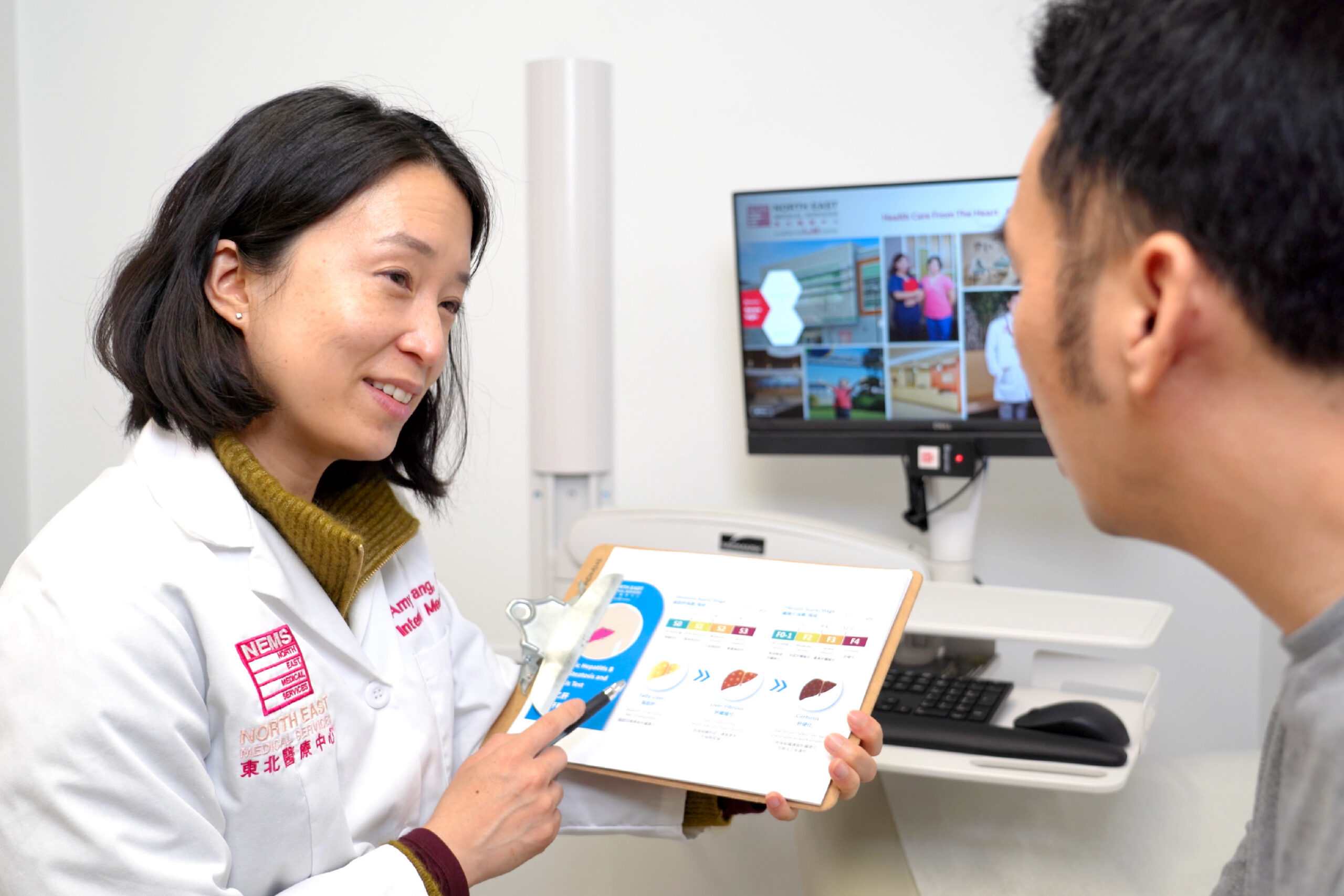
NEMS offers comprehensive hepatitis B and C care services at the comfort and convenience of your medical home.
Hepatitis B and C are the leading causes of liver cancer worldwide caused by infection with the hepatitis B virus (HBV) and hepatitis C virus (HCV). It is estimated that 1 in 12 Asian Americans are chronically infected with HBV, but most are unaware. Hepatitis B can be prevented through vaccination. While there is no vaccine to prevent hepatitis C infection, it is curable through treatment!
NEMS’ Hepatitis B and C Programs aim to eliminate HBV and HCV for current and future generations through universal screening and vaccination, perinatal prevention, monitoring, and treatment.
VIDEO: Learn more about NEMS’ Hepatitis B and C Programs (English)
Screening and Vaccination
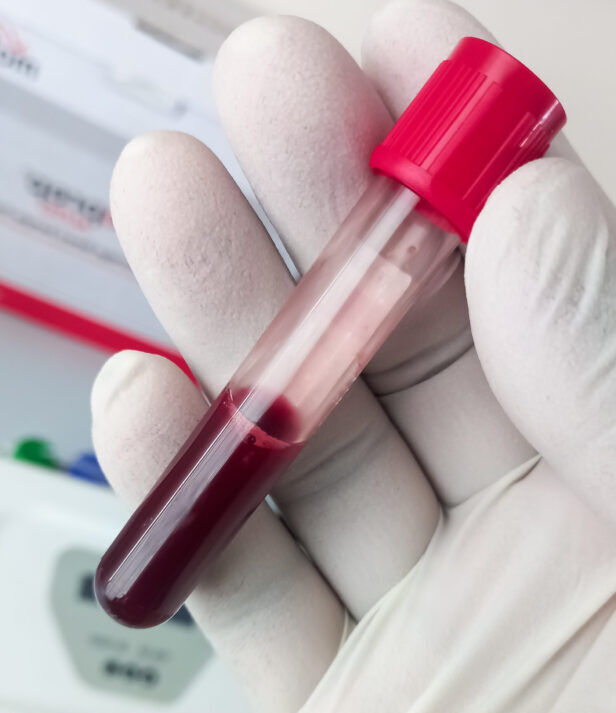
At NEMS, we recommend universal HBV and HCV screenings for all adults. HBV and HCV screenings are covered by most insurances. We also offer free HBV and HCV testing for all community members and persons without insurance who want to get HBV and/or HCV testing.
The CDC’s Advisory Committee on Immunization Practices (ACIP) recommends universal HBV vaccination for all persons younger than age 60 who do not have evidence of prior HBV infection or immunity upon screening. NEMS offers the 2-dose Heplisav-B vaccine for adults, including pregnant women, that can be completed over 1 month and the 3-dose HBV vaccine for children that can be completed over 6 months.
There is no vaccine for HCV.
Perinatal Prevention

NEMS screens for HBV and HCV in all pregnancies.
NEMS’ Hep B Moms care management program ensures mothers with HBV and their infants receive recommended treatment, monitoring, and vaccination during the perinatal period, when there is an increased risk for mother-to-child transmission.
Live Well, B You: Family Planning When Living with Hepatitis B
Disclosing your hepatitis B status to loved ones can be difficult, but it is very important that you do.
Monitoring and Treatment

NEMS ensures all persons identified with chronic hepatitis B and C are linked to care with a primary care provider or specialist who can evaluate, monitor, and treat their condition.
It is important for people living with hepatitis B to get routine lab monitoring and liver ultrasounds to stay up to date on their hepatitis B care management and liver health.
People living with chronic HBV should complete the below lab tests every six (6) months to stay up to date with their HBV care management:
- ALT to check if their liver is inflamed
- HBV DNA to check the virus count in the blood
Patients identified with HCV may receive their lab evaluation at NEMS.
NEMS offers routine liver ultrasounds for people with chronic HBV and HCV at multiple sites.
People with a history of HBV or HCV cirrhosis should get a liver ultrasound done every 6 months.
Additionally, people with HBV without cirrhosis who belong to one of the below categories have increased risk for developing liver cancer and should get a liver ultrasound done every 6 months:
- Men over the age of 40 years old
- Women over the age of 50 years old
- People with hepatitis D (delta) virus or HIV co-infection
- People with family history of liver cancer
All people living with HBV or HCV should have fibrosis staging done at least once in their lifetime. One of the best ways to complete fibrosis staging is through Liver Elastography, a point-of-care device that measures liver stiffness and fatty liver changes. NEMS offers Liver Elastography at multiple sites.
Patients with HBV may or may not need treatment, depending on their HBV status, so please discuss with your provider if you have any questions. NEMS providers and pharmacists can help identify affordable HBV antiviral medication options for patients without insurance or with high co-pays.
Patients identified with HCV may receive treatment at NEMS or be referred to a specialist. NEMS providers and pharmacists can also assist with prior authorizations needed to obtain HCV treatment.
Hepatitis B Management Guidance for the Primary Care Provider
Co-authored by NEMS Director of Viral Hepatitis & TB Programs, Dr. Amy Tang, this resource provides simplified guidance for primary care medical providers to manage HBV care in the primary care setting:
- Dr. Amy Tangs gives a mini lecture on the primary care HBV guidance: https://www.youtube.com/watch?v=-p2L0osAP78
- https://www.hepatitisb.uw.edu/page/primary-care-workgroup/guidance
Research and Advocacy

For more than a decade, NEMS has been a leader in promoting awareness of HBV within the Asian American community through advocacy and research, as Asians are disproportionately impacted by HBV infection. NEMS also has a long history of partnering with local organizations, such as San Francisco Hep B Free–Bay Area, and national advocacy groups, like Hep B United and Hepatitis B Foundation, to advocate for more HBV support and resources so future generations are HBV free.
Learn more about NEMS Publications & Research
Photo Credits: Horatio Jung
Other Liver Diseases

Metabolic Dysfunction-Associated Steatotic Liver Disease (MASLD)
One in four people in the world’s population have MASLD, which is when more than 5% of the liver is made up of fat. MASLD is closely linked with obesity, diabetes, high blood pressure, high cholesterol, sedentary lifestyle, a diet high in sugar and saturated fat. Severe MASLD can lead to cirrhosis, liver cancer, or liver failure.
MASLD does not usually cause symptoms. If you have a higher risk of this disease, your healthcare provider may suggest blood tests or imaging scans to check your liver.
The main treatment for MASLD is through healthy lifestyle changes such as eating healthy foods, staying physically active, and weight loss. There are also some treatments approved to reverse liver fibrosis in people with severe MASLD. Talk to your doctor about these options.
Alcohol-Related Liver Disease
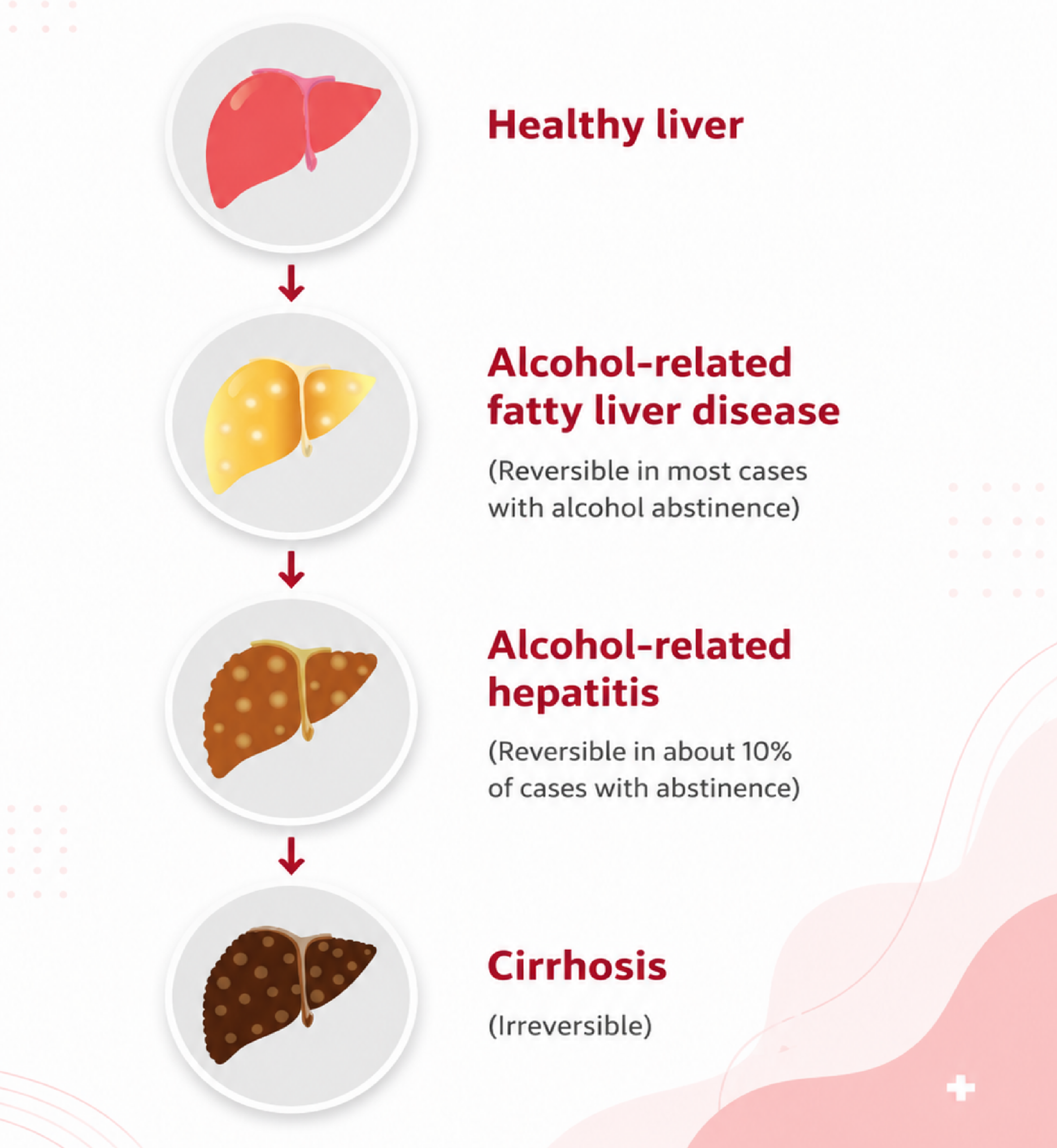
Alcohol-related liver disease (ALD) can develop from heavy alcohol consumption over time. The liver helps break down alcohol because alcohol is harmful to your body. However, if you drink more alcohol than your body can handle, your liver can become damaged, scarred, and not work properly. Liver elastography can help diagnosis if you have significant liver scarring or cirrhosis.
Heavy drinking is considered:
- For men: more than 14 drinks per week
- For women: more than 7 drinks per week
To safely cut down on your drinking, talk with your medical provider. There are medications that can ease the feeling that you need to have a drink that may help.
Liver Elastography
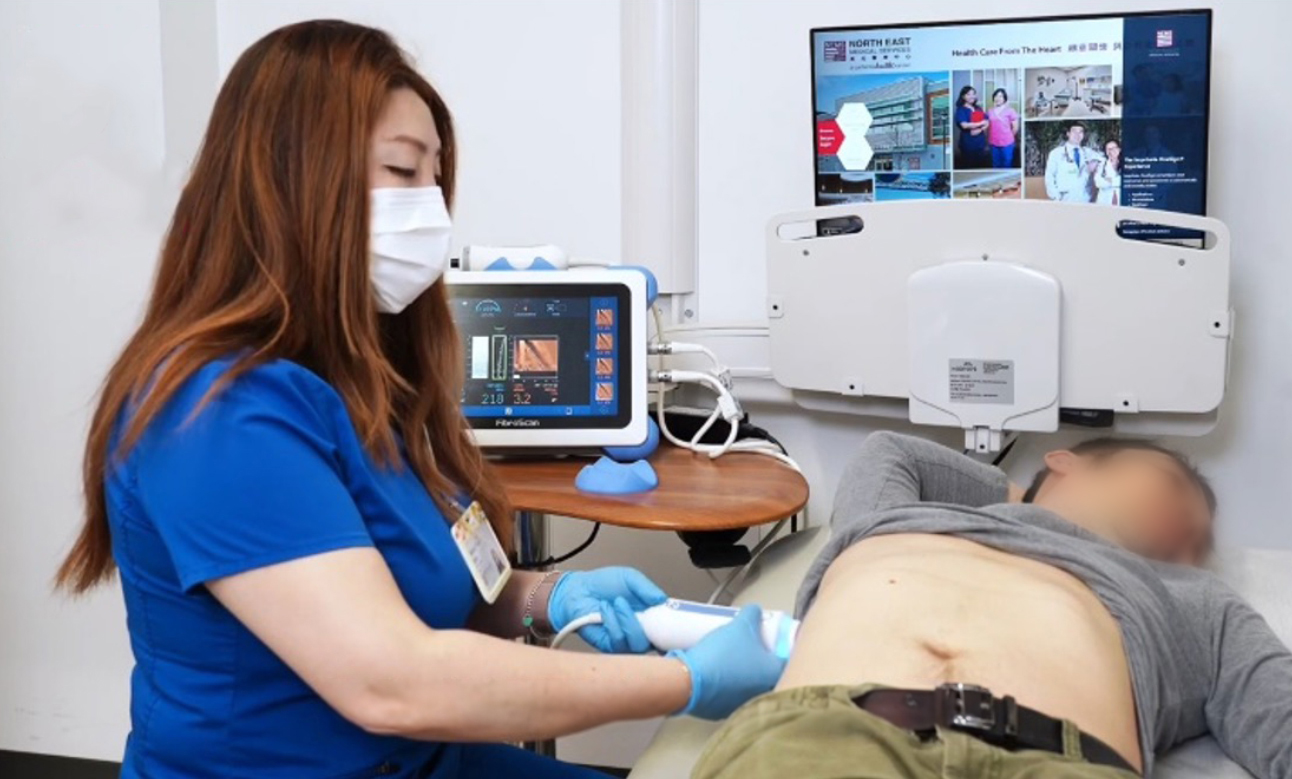
NEMS offers liver elastography (commercially known as FibroScan), a non-invasive way to assess for liver fibrosis or cirrhosis. The assessment uses vibrational pulses to measure liver stiffness and is performed during a scheduled office visit.
- All people living with HBV, HCV, MASLD, and ALD should have liver elastography done at least once in their lifetime.
- NEMS offers liver elastography/FibroScan at multiple clinic locations.